Posted by: carebear | October 17, 2011

Media Deep Freeze

Today’s online media invites a great deal of participation.  Whether it be in the online conversations initiated by comments following a news article, blog posts,  twitter followings or chatting with NPR during a live broadcast, if we want to, we can participate.

In both works by Katz and McCombs & Shaw, they discuss influence, be it by individuals we interact with or the media as a whole.  But, there was one major component unavailable during their studies – the internet.  With today’s technology, the internet is not just a cold medium, it is a media deep freeze, where information and interaction is literally at one’s fingertips.  So, with the various choices in media to obtain information about politics, can the media still determine the issues?

I thought I would take a look at the issues that a few major new providers were determining for the upcoming election.  Agenda setting of the issues can be seen quite clearly on CNN.com’s 2010 Election Center.  http://www.cnn.com/ELECTION/2012/campaign-issues.html  The site actually goes as far as listing the issues as Economy, Health Care, Foreign Policy, Immigration, Same-sex Marriage and Abortion.  Now, I couldn’t find the “issues” is such a nice little package on other major new sites such as msnbc.com or foxnews.com, but they are plastered with election coverage on these topics, nonetheless.  And, I didn’t even begin to explore other sources of online information such as candidate’s websites, political blogs, Facebook or YouTube.  So, I have all the information I need to determine my views, right?

With the tremendous amount of information available to us, it can be overwhelming, confusing, and be a challenge as individuals to determine what to believe and what to believe in.  Could it be that we rely on our “advisers” now more than ever, as stated in Katz’s theory of two-step communication?  With all of the information available today via television, internet, radio, etc., does the theory of two-step communication hold true now more than ever?  And if so, who are our opinion leaders?  Are they a manager in our office, an outspoken friend, or maybe someone with a large following on twitter?
Posted by: rovingrebel | October 17, 2011

Who Tells You What to Think About?

“Since a newspaper, for example, uses only about 15 percent of the material available on any given day, there is considerable latitude for selection. . .”

“. . . On an average day, a greater number of people reported participating in discussion of the election than hearing a campaign speech or reading a newspaper editorial. From all of this, the au- thors conclude that personal contacts appear to have been both more frequent and more effective than the mass media in influencing voting decisions.”

The above two quotes from this week’s readings really struck me. I think we all know that the news really can only cover a small percentage of what is happening on any given day, but a measly 15% just floored me. It also left me wondering if the ever closer to real time news cycle of today brings us a higher percentage of the available news, or just more coverage of the news that fits into that traditional 15% of news.  Where do people get their 15% of all news from? This question drove me to find out a little more. I was surprised to find a study from the Pew Research Center in September 2010 Americans Spending More Time Following the News.

According to this study the average American Adult spends 70 minutes daily consuming the news up 3 minutes from 2008.  70 minutes and just 15% of the available news worthy information. Wow, to think of all the important, potentially world changing topics we don’t hear about or have time to learn about.

The second quote reminds me that our interaction with the news is not limited to our personal time spent with individual media outlets. We must also look at who we discuss the news with and how their views and consumption patterns affect our own. How often do we ask others in our social circle about important topics of the day? How diverse are the members of our social circle in their backgrounds, views, and opinions? How does this diversity or lack thereof solidify or change our own views and opinions?


Posted by: dandelion4good | October 16, 2011

Foundations for Media Effects

Convergence Part II: Media Effects

This week we’re reading articles on early communication research. These articles cover the two-step flow of communication, agenda-setting and McCluhan differentiating between “hot” and “cold” media.

I have a hard time reading McCluhan. More than I can apply what he’s saying, I am distracted by the awkward combination of philosophical reaching and what seems like oversimplification of complex issues. Or maybe I just can’t get the ringing refrain of, “the medium is the message,” out of my head when I see McCluhan’s name.

McCombs & Shaw’s, “Agenda-Setting Function of Mass Media” seems widely accepted not just by scholars, but by the public, whether they are aware of the theory or not, to the point that they now expect and rely on the media to do this for them, tell them what they should think about and, and increasingly, how they should think about it. The consolidation of media following deregulation of the industry makes agenda-setting an important consideration for those looking at how media reinforces the status-quo and the role it plays in our democracy and the world’s economy. Has the mass media discouraged or encouraged political discourse in America?

But the most antiquated of our readings was the most interesting to me. Elihu Katz’, “The Two-Step Flow of Communication: An Up-To-Date Report on an Hypothesis,” examines several studies that looked at the role of interpersonal communication in relationship to mass media. One integral finding across studies was that opinion leaders consumed more media than their followers.

Katz identifies a weakness in the first study that could be pertinent for today’s study of new media and is supported by the subsequent studies discussed in the article by virtue of how limited the scope of their subjects. Researchers in the People’s Choice Study posited that influence flowed from those most interested to those less interested. Katz suggests the possibility that “the leaders influence only each other, while the uninterested non-leaders stand outside the influence market altogether.” The subsequent studies look at groups of people that are interested in common issues. They miss altogether the “uninterested”.

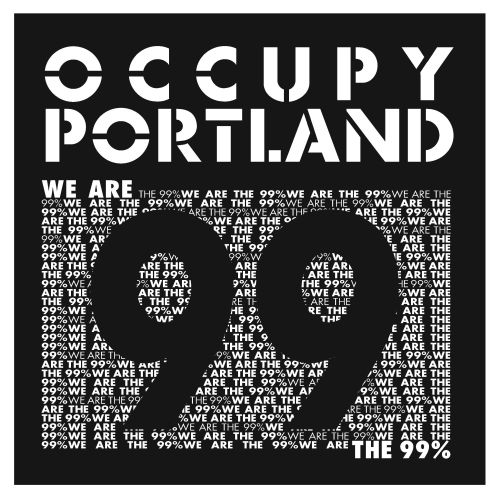
What could this mean to the now global Occupy Wall Street movement? The media’s coverage of the movement is sparse and mostly uses dramatic images of conflict, while not even covering real astounding measures being taken by banks and police. Is this just a group of influencers talking mostly to themselves via new media? Or is this the social movement that will successfully shift our values and discourse to focus on everyday people’s lives and less on the maintenance of a small elite class.

If agenda-setting is real, how has it been used to distract people from the truth? What are we supposed to think and do about?

Posted by: carolbcarolb | October 16, 2011

Hot, cold, or just lukewarm?

After getting over the devastating realization that, as a matron, nobody would be influenced by my interest in fashion…  😉 …  This week’s reading made me think about where I get my political information from and what I may not have exposure to based on media agenda setting.

The mid-1950s article said that the two-step flow of communication hypothesis is the flowing of ideas from media to opinion leaders and then from opinion leaders out to those that they influence. It doesn’t seem too much different today, but it is definitely more complicated, with more stops and loops along the way.

Of course opinion leaders are more interested in politics and have higher exposure to media, their quest for knowledge and interest in these topics make them seek this info out. The opinion leaders of today have a greater avenue for expressing/transmitting their opinions to the population. Whereas in the mid-century, opinion leaders main methods would be face to face communication, today, with the internet, they can reach hundreds, even thousands through blogs, websites, etc. And it would seem that one of the new loops would be the media (and politicians) paying attention to what these opinion leaders are saying.

McLuhan made my brain spin (have I become that provincial in my thinking in the years since undergrad school?), but after reading it about 4 times, I started to “dig it.” I found the discussion of whether the world could be automatically controlled by changing the amount of exposure to hot and cold media based on whether it was to a hot or cold population really fascinating. This also struck me: that in our “electric time” the “effect of electric technology has at first been anxiety, now it appears to create boredom.”

If opinion leaders get their information from the media and share it with those with lower interest levels in order to shape their opinion, then who is telling the media what to report out to us? The media is where most of us get our information about politics, so even if you are an opinion leader, you are basing your opinions on what you learn from the media, who has set the agenda, deciding what issues you will pay attention to. The press basically tells us what to think about. The vast majority of us don’t have alternative means of finding out political information. 

***

Has all the new technology and fast pace of our “electric time” caused anxiety in you? (I hear people say they are addicted to information or are “news junkies” because they can be connected to so many sources of news 24/7.) 

Has all the new technology and fast pace of our “electric time” caused boredom in you? (There is there so much coming at us at such a fast pace, do we consume and then get bored really quickly, waiting for the next new, exciting, shiny, thing to come along?)

What do you think about the media setting the agenda for what we pay attention to in politics? You can get info from opinion leaders, bloggers and others, but didn’t what they are talking about stem first from the media too? In our technological, and some say personally disconnected society, is there really any other alternative than the media setting the political news agendas for us?

Posted by: lmbshepard | October 16, 2011

Same as it ever was

I wonder what Walter Lippman would say about today’s media landscape? Could Lippman fathom a world with a 24-hour news cycle, ready access to news and information in our pockets or even television? Yet what Lippman wrote in Public Opinion (1922) rings as true today as it did in his time, “What we know about the world is largely based on what the media decide to tell us.”

So I find it fascinating that Maxwell McCombs seems to be saying in his work The Agenda Setting Role of the Mass Media that the media doesn’t have an agenda beyond “reporting the news of the moment.” McCombs made a specific point to note “…the use of the term “agenda” is purely descriptive. There is no pejorative implication that a news organization “has an agenda” that it relentlessly pursues a premeditated goal.”  I disagree. Throughout history the media has always had an agenda. Later he paraphrases News That Matters by Iyengar and Kinderthat, “By calling attention to some matters while ignoring others, television news [as well as other the other news media] influences the standards by which governments, presidents, policies, and candidates for public office are judged.”  It doesn’t matter if you are reading a “hyper-local” publication or watching a network news program held by a large conglomerate you are being exposed to an agenda. I can only hope that news consumers are savvy enough to know.

Discussion questions

Mc Combs writes “the imagery of news matches the image in the public mind.” If this is true, how can communicators change public opinion if the imagery put forth through the media is wrong?

Knowing the public can be influenced by “agenda-setting effects” is it ethical to try to influence the agenda and the outcome? Are there circumstances when it is unethical?

How can democracy be served when profit or a political agenda drives those that own the media?

Posted by: bahughes13 | October 16, 2011

Will Media Impacts Change in 2012 Election Cycle?

We know that President Obama’s campaign excelled in the use of social media during the 2008 race. Already we see the Republican Presidential candidates embracing YouTube as evidenced in this article:  http://www.dallasnews.com/news/politics/perry-watch/headlines/20111013-youtube-clicks-with-republican-presidential-candidates.ece

It’s a given that every major campaign will have to employ such tactics this time around, but to what end?

Voters will be bombarded with very targeted Facebook ads, likes and dislikes by their “friends”, and tweets from any and all interested parties. As evidenced by the Pew research I mentioned last week, people believe what they hear in social media is very close in quality to what they experience in mass media news coverage.

John Sherry’s article (Media Effects Theory and the Nature/Nurture Debate) seems to support those poll results: “Our brains have not evolved fast enough to keep pace with changes in technology… As a result of evolution, our ‘old brains’ automatically respond to media images as if they were real and react accordingly.”

In the McCombs/Shaw article (The Agenda-Setting Function of Mass Media), the authors make the point that “judgments of the voters seem to reflect the composite of the mass media coverage.” But what happens when social media takes a larger piece of the communication pie? What happens when the messages that we are bombarded with are more targeted and more polarizing? Is there a difference if the message originates with the campaign itself? Or via personal contacts who have their own agendas? The next 13 months will provide communication researchers with a prime atmosphere for investigation.

Questions for Discussion:

1.  In McLuhan, he states that “numbness is the result of any prolonged terror… The price of eternal vigilance is indifference.” Now that we’ve passed the 10 year anniversary of 9/11, how long can we as Americans continue to care? Is indifference inevitable? Or can it be countered by continued, strategic use of media?

2.  What will have more impact on the outcome in the 2012 election:  campaigns use of social media or the general public’s?

Posted by: bburatti | October 15, 2011

Opinion Leaders and Influencers

Fifty years ago “opinion leaders” read newspapers and listened to radio, then expressed their opinions to their own circles of influence, forming the “two-step flow of communication.” Early opinion leaders were confined to advocating only to individuals with whom they could make physical contact.

Strip away the antiquated references to social assumptions, (men get out more and therefore have more opportunity to be involved in political discussion) and we still have similar behaviors today. Opinion leaders seek out more media and more political discourse. They have credibility within their circles.

Our current technologies allow opinion leaders to extend their circles. “Opinion leaders” are what we’d call “influencers” today. They’re the bloggers and the people with thousands of followers on Twitter. Traditional media watches and reports those opinions. Today it’s not a two-step flow. It’s a dynamic 24-hour circle of information with multiple platforms and multiple voices.

McCombs and Shaw’s report on the agenda-setting of media zeroed in on a volatile period of American history; the 1968 presidential election. That study specifically explored how mass media impacted the opinion of the undecided voter. The data found that respondents accepted the composite of the media coverage. The data also showed that the media spent more time analyzing campaigns than detailing the issues. Within that historical period neither of these findings is surprising.

In a world of no internet and no cell phones, mass media had a much greater ability to set the agenda. Opposing citizen opinions were confined to “underground newspapers” and “underground radio.” Young people didn’t blog, tweet, or text. They took to the streets.

That particular election year was filled with major political events: the assassinations of Bobby Kennedy and Martin Luther King, Richard Nixon resurrecting himself from his 1960 presidential run, and third-party candidate and proponent of segregation, Governor George Wallace. An assassination attempt on Wallace forced him out of the race. Reporting these unfolding events while delivering the daily “body count” at the peak of the Vietnam War dominated media coverage.

McLuhan’s observations on hot and cold media trigger compelling questions of how media can be used for different results within cultures. Even within America we have subcultures and diverse levels of literacy. The notion of selecting specific media forms to more effectively reach a population based on the level of development can lead to either expansive educational discourse or controlled propaganda. The sophisticated use of media can achieve either objective.

Questions for discussion:
1. Does traditional media match story selection and tone to the current opinion polls of the populace or does it lead by posing issues and the voting public adopts the majority point of view?
2. What is the power of word-of-mouth today?
3. Specifically how can the use of hot or cold media influence opinion?

Posted by: acecasanova | October 14, 2011

Misogyny and Media

Today as I was doing my usual scan across the internet, I came across a new viral video that is a trailer for a movie I think it would be great to keep an eye out for.

If you click this link, or simply copy and paste it will take you to a video trailer for a film called MissRepresentation.  I feel this film brings up some very interesting and valid points about media and the portrayal of women throughout our society.  So I would like to pose the question;

How has convergence media perpetuated the idea of and increased our exposure to not only misogyny but also other stereotypes having to do with race, religious affiliation, etc.?  Also, do you feel you agree with this video, that it has indeed continued a vicious cycle, or do you feel that this video is wrong and why?

Just some fun discussion stuff mid-week.  😀

EDIT:  Here is the website http://www.missrepresentation.org .

Posted by: bburatti | October 11, 2011

Universal Pictures tests instant on demand

Today Universal Pictures announced that for the first time they’ll offer a first run film on VOD simultaneously with the theatrical release. They intend to test this dual platform release in 500,000 homes with Portland one of the two markets. This is a huge change in the traditional pattern of how films are released. Movie theaters are unhappy about it as it threatens their ticket sales. I think it’s finally acknowledging the choices consumers want for instant access in their homes on their own schedule. The VOD price is a little steep, but if you’re paying for four people and snacks at the theater, it’s about the same price.

Is the movie theater as a distribution point doomed to extinction? Will they simply become fond memories like the old drive-in movies?

Here’s the story: http://bit.ly/pKP6s0

Posted by: dandelion4good | October 11, 2011

Predicate to Occupation

My pedagogy is converging with my collaboration in the emergence of a knowledge culture.

This week I learned, nearly three weeks after they’d started, of the Occupy Wall Street demonstrations. Already interested media theory and social justice, I became more and more captivated with the movement as it sprang up here in Portland. I have several related searches open on my computer to monitor the message coalescing around it, observe the media’s treatment of the subject, and am at times engaging media and other interested parties in critical ways.

Meanwhile, my assigned reading this week included chapters on grassroots creativity meeting the mass media industry and the new relationship between politics and popular culture in Henry Jenkins’ Convergence Culture.

Jenkins practically predicts this kind of movement, even without discussing Facebook and Twitter (the book was first published the same year Facebook opened to the public) which have taken the convergence of grassroots creativity, folk culture and mass media to an epic and supremely personal level, for those who have access and choose to use them. That number may have increased recently when over 4 million iphone 4s sold in the first 24 hours after the product release. Smart phones and tablets have taken the convergence Jenkins writes about out of our living rooms and into our pockets.

Jenkins words on new media are hopeful, “If, as some have argued, the emergence of modern mass media spelled the doom for the vital folk culture traditions that thrived in nineteenth-century America, the current moment of media change is reaffirming the right of everyday people to actively contribute to their culture.”

Jenkins claims that knowledge based cultures “depend on the quality and diversity of information they can access.”

As Oregon’s public school strikes a deal with Google, what questions should we be asking about what students will have access to and what information will gain status and influence?

Do you know what your Klout score is?

Also, enjoy this cute little culture jam sent to me by a friend.99%

« Newer Posts - Older Posts »

Categories