Posted by: karlcd | November 12, 2012

This Is Your Brain On The Internet

Nicholas Carr says we are currently living between two technologically different worlds. In the 1950’s we started a transition from the dominant media being words on a page to the dominant media being computer screens. He says this lifestyle change from paper media to computer media has changed the way our minds are wired. This hypothesis is not revolutionary. A human’s greatest tool is our mind and it is constantly changing.  Our mind gives us the ability to rationalize, learn, love and react to our environment.  Most importantly our mind allows us to adapt and change.

The changes that Carr attributes to the internet do not take place in isolation. Other factors need to be considered before concluding that minds are fundamentally different because of a change in technology.  I need to know how the human mind changes when it is learning, growing or aging.   In this new world that Carr describes we are using our minds differently, but the effect of this change is still unknown.

Do you plan to keep your internet lifestyle constant?  Or do you see it changing as your life changes?

Do you use your brain more or less because of computers and the internet?


Posted by: Shekhah | November 12, 2012

What the Books Are Doing to Our Brains!

Reading the first chapter of “The Shallow” is a relief. I have to admit I hate reading books. I hate what some books are doing to my brain. I feel they waste my time and energy; what can be said in one page needed a chapter!

But I’m not the only person who hates reading books at least not among Arab people.

Arab individual on average reads a quarter of a page a year compared to eleven books read by an American according to a report released this year by The Arab Thought Foundation’s Fikr . It also said that an average Arab child reads “six minutes” a year in comparison to 12,000 minutes his Western counterpart spends.

The report also said that the minimum average time that youth spend on the Internet is 365 hours a year.

http://english.alarabiya.net/articles/2012/07/14/226290.html

These figures may be frightening to some but I think it’s a promising sign for good change through the use of the Internet as a resource to gain more knowledge and develop social interaction skills.

The Middle East has a high rank of internet and smartphone usage. http://googlemobileads.blogspot.com/2012/05/europe-and-middle-east-leading.html

The Arab Spring would not have happened if that fact wasn’t noticed. I can’t count how many books there that talk about the bad conditions and corruption in the Arab countries but none of those books were able to improve  anything.   The internet users, who haven’t read them, make that change.

Is there any book that was able to change people’s way of thinking in the past five years ?
Is social media the new books? 

Posted by: sarakroth | November 12, 2012

Is Twitter Retrogressive?

I was fascinated by the insights “The Shallows” gave into the history of literature. I knew the basics, but didn’t realize, for instance, that syntax and punctuation were a relatively recent addition. I also didn’t realize that words didn’t used to be separated by spaces. “The Shallows” posits that because syntax, punctuation, and word separation didn’t used to exist, people weren’t able to read deeply. Instead, they spent the majority of their energy deciphering what the words actually were, and less time contemplating the deeper meaning of the words.

At first, imagining a world where sentences weren’t structured with punctuation, syntax, and word separation sounded impossible to navigate. But then, I realized that many of our new communications do just that. Texting has all but eliminated punctuation. In a world of 140-character tweets, syntax often gets left behind in favor of fitting everything in. And hashtags have eliminated spaces between words. #havewestoppedthinkingaboutthedeepermeaninginwords?

Posted by: miralbessed | November 12, 2012

Is it the technology or the society?

” Once I was a scuba diver in the sea of words. Now I zip along the surface like a guy on a jet ski, ” Nicholas Carr writes in his book The Shallows. Is it really fair to blame lack of ones attention solely on technology?  I simply don’t believe that’s true. It is not the Internet we need to fear, but the demands of our society. Life in the 21st century, in the west particularly, is about efficiency. It is about accomplishing more in less time. It is this problem that makes us jump from one page to another in search of quick answers so we can get on to the next thing on our list. Therefore, we settle for quantity over quality and with no time for digestion, thorough analysis is out of question. As an example, lets look at this very reading. As a graduated student, I am expected to finish this book in two weeks while also attending to other academic and life obligations. Am I going to scan it or read every page of it? Do I have time to dive deep into the concepts and discourses? While I would love to, I simply don’t have the luxury of time. The shortness of our attention span and our dependency on the Internet is less a problem of cyber take over and more a matter of our society’s intensified hunger for economical “upward mobility”.

So the question is, how do we find the balance?

Posted by: lee E. | November 12, 2012

Evolved devolution

Carr makes clear in Chapter 4 of The Shallows that we’re such a stimulus-based species it’s actually quite unnatural for us to expect to be good at “deep reading”—In fact, “to read a book was (is) to practice an unnatural process of thought”.   Since “the natural state of the human brain, like that of the brains of most of our relatives in the animal kingdom, is one of distractedness,” (64) we’re apparently to have learned the “mental discipline” required to focus on printed text.

Prior to writing Imagine, author Jonah Lehrer wrote the New York Times book review of The Shallows.  He summarizes Carr’s position—“The online world has merely exposed the feebleness of human attention, which is so weak that even the most minor temptations are all but impossible to resist,” and then proceeds to disagree—pointing out that the “preponderance of scientific evidence suggests that the Internet and related technologies are actually good for the mind.”   Lehrer cites studies about increased prefrontal cortex activity and improved visual attention from video games.

What do I care if my prefrontal cortex is firing like the Fourth of July if what’s represented is actually just the technologically evolved devolution of primal hunter/gatherer skills that are fast becoming obsolete?  While I understand that we may be naturally better at the skills Lehrer defends technology for, could it be Carr’s mental discipline that separates us from other species?

Posted by: corrinebuchanan | November 12, 2012

Are we disposable?

While reading the first six chapters of The Shallows; What the Internet is Doing to Our Brains, I was struck by Carr’s quote of McLuhan comparing human beings to “the sex organs of the machine world.” The determinist view that humans are meant to continue to create and grow more sophisticated tools and technology until humans are no longer need  is a terrifying thought.

Though this idea is extreme it isn’t unreasonable. From medicine to manufacturing, we are already seeing the role of the human decrease dramatically and the role of machine increase.  With this change comes a lot of opportunity. Below is a clip of Steve Mahan, a blind man who is given personal freedom and opportunity through the Google Self – Driving Car.

This technology is amazing, but does it come with a price? I can’t help but think it won’t be too long until we go from the self – driving car to this…

Okay maybe this is a little dramatic, but it doesn’t seem that far fetched anymore. Will we let it get to this point where technology surpasses humans and is viewed as the ultimate truth? What do you think our world will look like?

Posted by: emmajoyce | November 12, 2012

In search of deep thoughts

In his book The Shallows, Nicholas Carr writes about the evolution of information distribution in its many forms, noticing shifts in relationships between authors and readers. He points to a Wallace Stevens poem, “The House Was Quiet and the World Was Calm,” for its commentary on deep reading, and acknowledges how the Internet has created shorter attention spans, drastically cutting deep reading experiences out of daily routines.

Carr writes, “The bond between book reader and writer has always been a tightly symbiotic one, a means of intellectual and artistic cross-fertilization. The words of the writer act as a catalyst in the mind of the reader, inspiring new insights, associations, and perceptions, sometimes even epiphanies” (74). It is interesting to examine how e-books, online newspapers and magazines, Twitter feeds and Facebook posts allow for a layered, non-linear distribution of words, images, and sounds that has turned reading into a community-based, networked system.

While these social spheres can foster intellectual debate, collaboration, and a myriad of back-and-forth exchanges, I wonder if that sacred balance between author and reader has been disrupted.

I have always been drawn to the quiet calmness that books provide, but find myself enmeshed in an online world out of necessity. It is stimulating and informative and engaging…but reading from a screen will never trump the personal satisfaction of being alone with a physical book with nowhere to go but onto the next page.

Do you feel that online reading has diminished individual deep thinking and reflection? Why or why not?

Posted by: kelliroesch | November 12, 2012

Flittering around on the Internet and our changing brains

Before writing The Shallows; What the Internet is Doing to our Brains the author Nicholas Carr posed a question in The Atlantic magazine. “Is Google making us Stupid?” he asked. Like many people who now spend a lot of time on the Internet, Carr was once an avid and deep reader who felt himself changing.  “Once I was a scuba diver in the sea of words. Now I zip along the surface like a guy on a Jet Ski” he said. 

Besides anecdotal accounts that we all may identify with, Carr references a study from 2007 by the University College of London that examined the online habits of library users. The study, conducted over five years, found that Internet users bounced around a lot amongst pages, but when they did stop, they rarely read more than one or two pages of the site, and they rarely came back to pages they visited.  As a result, the Google Generation,  as they are called, lacks analytical skills necessary to assess the information they find on the Internet, said Information Week.

I believe that the original study conducted in 2007 is sorely out of date since five years has passed and “power browsing” is much higher due to more mobile devices and tablets with Internet capabilities available to information consumers.  The study found back then that “everyone, not just young people, prefers easily digestible chunks of information, rather than the full text, ” and that “Society is dumbing down.” (Information Week) 

Do you think we’re smarter or is society dumbing down?

Posted by: chrissypurcell | November 11, 2012

Is the Web What we Make of It?

When I was an undergrad, I subscribed to the church of Steven Johnson; I was fascinated by everything he wrote, particularly his book Everything Bad is Good for You. In a time when most critics were demonizing the effects of pop culture technologies like television and video games, Johnson was espousing their capacity to help us develop intelligence. So I was admittedly skeptical when I picked up The Shallows and got to work.

I’m curious what everyone thinks about the debate between Sarnoff and McLuhan mentioned on page 3. Are technologies essentially neutral until we ascribe specific uses and values, or are they inherently beyond our control insofar as they change the very functioning of our brains?

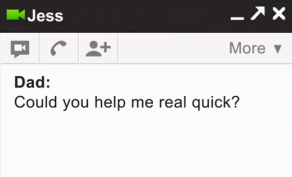
Anyone who’s seen an ad for Google Chrome knows that Google is using this debate to its advantage. The campaign for Chrome, titled “The Web is What You Make of It”, reminds us that the internet is a tool with tremendous capacity for rich human connection. If you haven’t seen the TV spot “Jess Time” already, check it out to see what Google is up to:

ImageSo I suppose my question is, is Carr’s trepidation towards the cognitive effects of increased internet use just a knee-jerk reaction to a new technological revolution like we’ve seen with other technologies before? Do the negative implications of these effects outweigh the capacity for good – connection to others, democratization of media, etc. –  that the internet can offer?

In The Shallows, Nicholas G. Carr describes the ways that the digitization of books could influence how books are written. He writes about the possibility of books being written by crowd-sourcing and ahow books in digital form can be endlessly edited and revised.

Most importantly, the digitization of the book means we can all be writers. This is already happening through blogging and self-publishing.

There are many positives about this shift, but one big negative is on my mind – losing the power of books to change us. In traditional publishing, manuscripts are vetted by expert editors and publishers before publishing, and then evaluated by expert critics. This allows readers to learn, from authority figures, what is valuable and what isn’t. It also gives support to radical or experimental books, helping us understand them and see their value.

A new publishing world where everyone is a writer necessarily means an anti-authoritarian stance. Every piece of writing is instantly available, no matter its quality, with the result that any piece of writing is perceived as just as valuable as any other. Is this a good thing? Perhaps. But there’s a danger that we will read only what meshes with our already-held opinions. Without publishing choices and criticism to tell us why something new and different matters, we may never read outside our comfort zones. Without that, books won’t change us.

Can democratization go too far? Is there value in aesthetic judgment? In an e-publishing future, can books still be agents of change?

« Newer Posts - Older Posts »

Categories