Posted by: acecasanova | November 13, 2011

I think I’ve seen this somewhere before…

As I continue through the glorified rant that is “The Political Economy of Media” I find it more and more difficult to keep my mind… active.  Have you ever had the feeling of reading a paragraph, and then feeling like you didn’t truly read it, and then you re-read it only to find that it likely wasn’t necessary to read in the first place?  That’s how I feel with a lot of McChesney.  This is not to downplay McChesney’s knowledge or to say this book is in any way a waste of time or not informative.  What this does say to me is that each chapter’s message is the same as the first.  Media is run by money and power.  Corporate greed and control have led big money to try and manipulate the public through multiple media channels and cover everything up that they don’t want seen.  It’s an age old story.  Power is corrupt and they will do what it takes to cover up their corruption and control the minds of the people in order to blind them from their true rights and freedoms.

Upon approaching chapter 16 I was excited!  I felt “finally, I’m going to read something a little different and more applicable to modern society and media technologies.”  At first, I wasn’t disappointed.  Then he began talking about the public debates over radio broadcast and television… AGAIN!  In the forward to this book McChesney stated that he would be redundant at times, but this is approaching a point of absurdity.  At the same time I have not yet seen one solid solution that he has produced.  Sure he has come up with some solid theoretical possibilities, but nothing that has captured me and said, “Hey YOU!  WAKE UP AND SMELL THE CORPORATE BACON!”  McChesney, I enjoy you, I applaud you, I feel you have pointed out things that only the bravest of authors would point out in exposing big business and government control of media and media policy.  My friend, one piece of advice.  Keep it short, simple and to the point.

Note:  Admittedly I have not entirely finished all of this weeks reading and yes, perhaps this is slightly a rant of my own.  Also, this may be a fairly inaccurate assessment of McChesney as stands, but it is my assessment.

Question 1:  In Chapter 15 McChesney states that perhaps one of the reasons there has been a lack of debate over the ownership and control of media is that the public simply doesn’t care.  Do you feel if the mass public were better informed, that they would possibly take more responsibility and feel obligated to take part in this issue?

Question 2:  Do you feel the internet has proven itself to be the next democratic frontier since the publishing of this book?  Or do you feel that it has become more a tool for corporate influence?

Question 3:  Off hand, should this come up in class, what are your criticisms of McChesney’s book, “The Political Economy of Media” and how could he better approach the subject to make it more consumer friendly?
Posted by: bburatti | November 13, 2011

Breaking News Coverage

McChesney demonizes big media as completely profit driven.  In the context of conversations in the boardrooms and Congressional lobbying lunches, I would agree. However, it’s important to distinguish between corporate ownerships and the work of journalists in the trenches.

I’m watching the live coverage of the removal of the Occupy Portland camp. News crews are on the front lines. Every television station stayed on live all night long, airing no commercials.  McChesney never acknowledges that local stations routinely provide continuous news coverage at the cost of tens of thousands, sometimes hundreds of thousands of dollars.  Nobody makes money on breaking news.  The profits in big media are made on entertainment content and the distribution of product. That won’t change. It’s localism that’s at risk.

At the same time, protesters have their own cameras and cell phones documenting the event. They’ll post them to social media sites and on YouTube, representing multiple points of view and experiences. The whole world really is watching. McChesney asks if the Internet will erode the consolidation of big media. I don’t think so. It will bring new players to the table. We’ve already seen that with YouTube and Twitter. Traditional big media’s ability to exclusively control the conversation is waning.

McChesney makes the point that the U.S. lacks a strong Left movement. He bemoans the absence of a media voice for the Left. We’re seeing the beginnings of a meaningful movement that’s engaging Americans in real conversation about both politics and how stories are covered.

Questions for discussion:

  1. Do you think that a large corporation would provide a more liberal point of view if they thought it was profitable?  An example is MSNBC’s prime time which has a definite liberal slant. Do you think they’re only doing this to create an alternative to Fox and CNN to attract a distinct and salable audience?
  2. McChesney argues that big media “ignores, trivializes or demonizes social movements.” How do you view the national and local coverage of the Occupy Movement in this context? Do you see any differences between media outlets, national or local, in how they’ve treated the story?
  3. Does the Left need a PR firm?
Posted by: carolbcarolb | November 13, 2011

Buy this satellite.

AHUMANRIGHT.ORG’s mission is to build a free communication network that would be available anywhere in the world. This group started an initiative called Buy This Satellite with the goal of raising enough money to buy the Terrestar-1 satellite to fulfill their plan of making Internet access free and global. They had a 3 phase plan to purchase and launch the satellite, and undaunted by this enormous challenge, they launched an educational and fundraising campaign, and they managed to raise… $64,000. On 7/26/11 the satellite was sold to the DISH network for 1.375 billion dollars.

Hand in hand with the issue of universal Internet access is the issue of access to computers. The One Laptop Per Child foundation distributes low-cost, low-power laptops to children around the world. To date, they have distributed around 2 million laptops, a great accomplishment, but if there are now 7 billion people in the world, and only 1/3 of them own computers, that leaves an enormous gap to fill. An example of a government’s work in the area of increasing computer access is the government of India who recently released a very low-cost tablet with the technological ability to be used with current web-based applications. Thinking about the work of groups like the two mentioned above, I wonder if grassroots organizations can succeed with their missions without help from the government.

***

1. Can grassroots organizations make a difference in the quest for universal Internet access and computer ownership? Will they ever be able to access enough funds through private donations to compete with corporations?

2.  Is universal Internet access possible without government assistance, or without it being a governmental mandate?

3.  Taking into consideration the tenents of neoliberalism, do you think that the US government would be “allowed” (by the media giants) to make universal Internet access a reality?

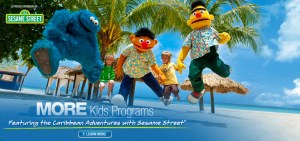
Eighteen chapters in and I think it is fair to say that McChesney overwhelmingly favors a non-profit (possibly government-funded) broadcast media system. The closest thing we have is PBS, and probably the most universally recognized show on PBS is Sesame Street. This month, the Street marked 42 years on the air.

Sesame Street now comes in 20 or so different international flavors and is shown in more than 120 countries across the globe. According to the Sesame Street wiki, the Carnegie Institute, the Ford Foundation, the U.S. Department of Education, and others helped underwrite the cost of forming the Children’s Television Network and producing the show initially. After disputes with the federal government in the late 1970’s, producers decided they needed to find a more stable form of outside funding. That led to licensing deals with toy companies and publishers. (Tickle Me Elmo anyone?) In the late 1990’s, the producers started accepting sponsorships from McDonalds, baby food companies, and, now, Beaches Resorts.

Is this the way it is supposed to be? Not in McChesney’s utopia. But it is what we have, and, for now, it works. There is well-funded competition from Dora and SpongeBob, but few shows for kids can or are willing to take on issues such as hunger, homelessness, and HIV. However it is funded, I hope Bert and Ernie are still around for my grandkids. They still have a lot to teach us.Discussion Questions:  1.  If government funds public television and radio, whether through grants or pass-through taxes on corporate media, how would McChesney guarantee that the public product is not subject to censorship?

2.  Does the acceptance of corporate sponsorships by PBS and NPR erode their public service ability? Or strengthen it?

3.  How does McChesney view the Internet of 2011? Does he believe it fulfills its promise as a “much needed public sphere” or is it hopelessly caught in the control of media moguls?

Posted by: Donna Z. Davis, Ph.D. | November 8, 2011

Citizen journalism?

I got an email just today from the organization linked below… thought it was interesting timing given our conversation of the past few weeks as inspired by our McChesney reading.  Thoughts?

http://neworganizing.com/

Posted by: dandelion4good | November 8, 2011

Don’t Get Smart

Does the mass media serve democracy? No. We have to work to be informed enough to participate in democracy. We must become media literate. But we’ll talk about that next week. Does the mass media obstruct democracy? Yes. How, you might ask. In a commercial media system, the media must serve the corporate interest of media owners and media buyers. Media must entertain us. They select what we see and hear. Until very recently, they’ve had a stranglehold on information. I think that even the most enlightened and stalwart among us are still influenced by media. We are such visual creatures. Who has time to analyze the steady stream of information we process each day?

But there is a more insidious element spreading through the mass media system and undermining democracy: an attack on intellectualism. Examples can be found through the many stereotypes perpetuated and relied upon in programming, the framing used by news networks such as Fox news and the very personalities allowed entrée to speaking at the table of the masses. As if Ann Coulter has anything substantive to say. Give me a break. Our media is more likely to recognize the accomplishment of swallowing a gut-wrenching number of hot dogs than winning a Nobel Prize. When was the last time you heard something about the winner of a literary competition?

Paul Krugmen identifies the “Powell Memo” of 1971 as one of the founding documents of this cultural agent that has spread through media, universities and the contemporary mind. The memo was sent to the US Chamber of Commerce titled, “Attack on the American Free Enterprise System”

Henry Giroux explains that the memo informed a, “long-term strategy…put into place in the 1960’s and 1970’s to win an ideological war against liberal intellectuals, who argued for holding government and corporate power accountable as a precondition for extending and expanding the promise of an inclusive democracy. The current concerted assault on government and any other institutions not dominated by free-market principles represents the high point of a fifty-year strategy that was first put into place by conservative ideologues such as Frank Chodorov, founder of the Intercollegiate Studies Institute; publisher and author William F. Buckley; former Nixon Treasury Secretary William Simon, and Michael Joyce, the former head of both the Olin Foundation and the Lynde and Harry Bradley Foundation.”

To read more of this article, see the link below.

http://commonwealinstitute.org/archive/the-powell-memo-and-the-teaching-machines-of-right-wing-extremists

Posted by: mikebodinesayshello | November 7, 2011

A Word on Advertising

So, given that we face a tidal wave of commercial messages on a regular basis, I thought it would be worth discussing the fact that we are becoming less aware of when something is being marketed to us. In the past, American advertising looked like this:

Advertisers used celebrities and jingles to market their products, but the message was straightforward. Marketers communicated the benefits of their products in an effort to persuade the consumers to buy. However, as the frequency of advertising increases, the impact of straightforward messaging has decreased. Marketers are now forced to deliver their messages creatively or cloak their messaging through product placement or other forms of gorilla marketing. Now, advertising looks like this:

Consumers have forced marketers to be more creative to stand out. However, one of the responses from marketers has been to hide their advertising efforts.  Whether a character in a movie delivers a monologue in front of the sign of a major retailer, or Paula Abdul drinks out of a Coke cup on American Idol, we are being fed messaging in increasingly less straightforward ways.

Questions:

Can you blame marketers for being more creative with their messaging given the current media climate?

Is it ethical to try to reach the consumer’s subconscious?

Posted by: Nathan Dinsdale | November 7, 2011

And now…three minutes with McChesney

It was hard for me to read McChesney this weekend without drawing parallels to the commentary of late CBS News personality Andy Rooney. Both share a certain curmudgeonly analytical style and a tendency to focus more effort on complaining about a given issue than offering any tangible ways of resolving it.

Aside from Rooney’s gruff everyman appeal, a primary distinction between the two is that McChesney growls about the hobbling of public broadcasting (chapter 9), the dilution of the First Amendment (chapter 10) and the neoliberal commercialization of communication (chapters 11-14) instead of baseball, computers and the cotton in pill bottles.

You know what makes me mad? McChesney is largely spot-on with his deconstruction of “The Political Economy of Media” and yet, heretofore, he offers few constructive ideas for how to address the media’s ills. It’s a borderline defeatist position that many (if not most) people seem to share. The glass isn’t half-empty and it’s not half-full. It’s cracked and leaking profusely.

While I wouldn’t necessarily argue against McChesney’s analysis, I would point out that there are plenty of examples that provide a counterpoint to the doom and gloom. One element of the “New Economy” is the rise of social media and “citizen journalists.” While this can be problematic on many levels, I think the potential for genuinely democratic communication is undeniable. And, for whatever issues that “neo-liberalism” has wrought, independent and impactful media have risen up in recent years within the ostensibly free media market. Most notably, ProPublica.

Discussion questions:
What long-term impact do you think the Citizens United case (in which the Supreme Court declared that a corporation is a “person”) will have on the “extension” of the First Amendment as McChesney describes it?

Where does a non-profit, investigative journalism organization like ProPublica fit in McChesney’s vision of a neoliberal New Economy?

For those who lament attacks on public broadcasting, what, if any, responsibility do individual citizens have to support those outlets financially?

Posted by: slee3324 | November 7, 2011

This is my time, so please quit bothering me

Recalling a comment made in class towards the beginning of the term, one student pointed out that people consume media as a means of relaxation, a way to “shut off” from the hustle and bustle of their daily lives. It is no secret that a majority of the public spend a sizeable amount of our valuable “down time” consuming media, whether it is catching up on episodes of American Idol, curling up in bed with a favorite magazine, or streaming Pandora while enjoying an evening dinner and glass of wine. Media is our biggest form of entertainment. However, during this relaxation time, we cannot avoid constant bombardment by advertisements. Robert McChesney (2008) points out that as a result of overexposure, consumers have developed immunities to ads. This has led to a “commercial tidal wave” of increased advertisements (McChesney, p. 266).

Even if we wanted to avoid advertisements when we consume media, it is nearly impossible to do so. Advertisers have become smarter about their product placements, and often times it is difficult for consumers to distinguish between advertising motifs and traditional media content. An example of this is when news channels sell commercial airtime to organizations. Those commercial sponsors develop stories that look like real news stories and the news channels air these during actual news broadcasts. This is not only confusing to viewers but misleading because the content appears as legitimate news stories when in fact they are paid advertisements. So, not only do we struggle to find moments of relaxation between ads, advertisers have found a way to get at us during actual programming.

My questions around this fundamental dilemma are as follows:

  • Where is the line between real content and marketing messages? Does one really “own” their “free” time when it is used to consume media that is ultimately tainted by marketing motifs?
  • Who determines where corporations can advertise? When will Kindles have advertisements—or do they already?
  • What tolerance and say does society have about over saturation of advertising? What would parents do if advertisers targeted elementary schools or text books?
Posted by: sdiaz05 | November 7, 2011

Are we all playing by the golden rule?

We’re all familiar with the ‘golden rule,’ but have you ever heard of the ‘golden rule’ of business?  The rule states that ‘he who has the gold makes the rules.’  No one likes to admit it but it seems that society has allowed this to become reality.  Capitalism is a great vehicle for prosperity; unchecked, it is also an addictive drug that fuels self-interest .

Think about it.  Which presidential candidate typically wins the campaign?  Which corporations control the marketplace?  Who do the policies favor?  Why do only a select few have the vast majority of the wealth?

I often complain about big business.  I want to like them and do business with them but it seems that they gouge us at every step.  To add insult, they give very little to society and now don’t even offer us jobs as a result of outsourcing.

So how do we take back control?  If you’re like me, it feels helpless.  McChesney quotes Chomsky as saying “If you act like there is no possibility for change, you guarantee that there will be no change.”  We need to act.  Big business depends on us therefore we have the greater power.  We just don’t use it.  Why don’t we play by the golden rule?


Discussion questions:

  1. How bad would things have to get for you before you acted in protest?
  2. What exactly would you do to try to take that power back?
  3. Do you believe that we have enough power to force change?
  4. If your answer to #3 is no, why not?
  5. What do you think we can do as a whole to create change?

« Newer Posts - Older Posts »

Categories