Posted by: bburatti | April 29, 2013

The LGBT Consumer


I’m looking forward to hearing Bob Witeck speak about marketing to the gay and lesbian community. I’m aware of workplace sensitivity and policies surrounding LGBT colleagues. I hadn’t thought about the spending habits of the gay consumer until the recent controversy over the Gresham bakery that refused to make a wedding cake for a gay couple.

The Witeck Communications website presents compelling business reasons to develop marketing plans to reach this customer.  They have more discretionary income because they have fewer children in the home.  Gay consumers form strong brand loyalty around companies that demonstrate sensitivity to the LGBT community.

On the company reputation front, a blunder with the gay and lesbian community can quickly end the relationship with the LGBT consumer. Worse, it can lead to your name appearing in case law.  In the Sunday Oregonian David Sarasohn pointed out that a Washington florist is now facing a discrimination suit filed by the ACLU for refusing to provide  flowers for a gay wedding.

An understanding of this group develops through meaningful dialogue. I once met with gay activists due to a scene in an NBC program. The scene took place in what looked like an S & M gay bar. The bartender wore leathers with suggestive paraphernalia placed behind him. The activists objected to the stereotypical portrayal. They believed those images led to misunderstandings about gay people and incited violence against them.  I came to believe they were right, and I appreciated the chance to have the conversation.
Posted by: corrinebuchanan | April 29, 2013

A Battle for Attention – Advertisers vs. The World

As I begin to write this post, I realize I am using my laptop for research, using my ipad to listen to music and my phone to text and check my social media. My attention is divided to say the least. This multitasking and the need to always be mentally stimulated are now the norm and it is what advertisers constantly have to battle. 30 seconds can now seem like a lifetime, and if my attention is not caught within the first 2-3 seconds of an ad, I am changing the channel or checking my phone. In Exploring the Audience’s Role: A Decoding Model for 21st Century, Kenyon et al. explains that one way advertisers are tackling this challenge is by creating ads that are so creative that they have an identity of their own, separate from the product. Immediately I thought of the most recent AT&T commercials. Whether people think the kids are cute or annoying, they are talking about these commercials. The product itself is not mentioned until the end, but with the kids help, we hear about why the qualities that make up the cell phone service are so important. These commercials are cute, they are clever, and they have the ability to make people stop what they are doing and watch, but in they end, is establishing its own identity enough to increase sales at AT&T?

Posted by: ellenpayne2012 | April 24, 2013

Poler’s People Decode

Poler is very cleverly drawing in customers by taking advantage of its target market’s fascination with social media. This company certainly took a lesson from the same theory behind “Exploring the Audience’s Role: A Decoding Model for the 21st Century.” Take a PBR-drinking, trucker-cap, very-unattractive-sleeping-bag-wearing-camping-enthusiast and ask him to post photos of himself going about his day on Instagram and Voila! You have a new brand. Buy products directly at Tumblr featured in their blog posts, tweet about it, like them on Facebook, view their Adventures series, find them on Pinterest, or view an instructional video from Dr. Dan. And if you’re a bit old fashioned, catch a party at their flagship store on NW 13th and Burnside. An enthusiastic following is posting and talking about themselves in very creative ways. As Kenyon, Wood & Parsons state in this week’s article, “As audiences are no longer “passive” viewers of advertisements, it is imperative that a communication model pays tribute to the fact that audiences are interactive participants in the sophisticated decoding of advertisements.” Poler’s customers are imaginatively projecting themselves into the brand. As Poler says of its products, “It’s for people that wonder why everyone is trying to pretend they are going to do first ascents on alpine peaks instead of celebrating the fact that they are having adventures that are awesome in their own way.” It’s so uncool; it’s really kinda cool. (I want one of their backpacks!)

Posted by: robertheinz | April 24, 2013

Will focus groups determine the next president – or NOT?

Focus groups aren’t just for testing super bowl ads or new TV shows, they can also have a major influence on world politics. After the GOP’s failure to convince Latino voters during the 2012 presidential race, you can be sure that the campaign strategists for 2016 won’t let that happen again. Not surprising, focus groups are a helpful tool for them to test their political agenda as with recent proposals for immigration reform. But how much does success or failure depend on focus group results? After all, as Morgan indicates, focus groups are increasingly popular but their implications remain controversial.

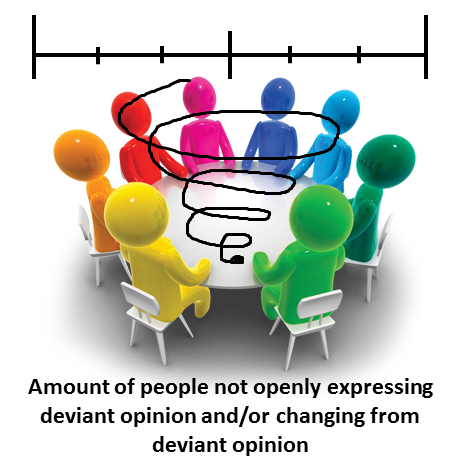
The constant struggle between content focus and participant interaction, the role of the moderator, and very likely, like Kara mentioned in her post, effects of Noelle-Neumann’s “spiral of silence” in a heterogenic focus group have to be addressed. Is a “spiral of silence” even inherent in focus groups?

Spiral of silence in focus groups?

Spiral of silence in focus groups?

While the error potential and plethora of variables will continue to cause headaches for quantitative researchers, focus groups are also a blessing for qualitative researchers and a key contributor to grounded theory.  However, I believe that the true strength of focus groups is in a combination of both research methods and will be curious to find out if academic standards for research design, like proposed in Morgan’s article, actually survive the constraints of market research at tomorrow’s field trip.

Posted by: bburatti | April 24, 2013

TEEN SCREENS

I noticed that the teens and advertising study was conducted before the explosion of social media. I’d be fascinated to see this study duplicated among the same age group now to test reactions to advertising on social media platforms, specifically with people who have grown up with social media and have never known a world without it.  This would be fascinating! Would the interpretation of images be determined even more through associations and personal stories within the friendship circle? Is the inherited culture association waning?  Is there a new definition of culture itself as popular culture over traditional linkages such as nationality, ethnic background, religion or ethnic class?

Piper Jaffray released a study on April 10 of this year that showed that 48 percent of teenagers in upper and average-income homes own an iPhone, and that number is growing every month. What impact does the use of technology have on how we respond to messages and relate to each other?  Has this already changed?  It would be an intriguing focus group project.

Having been both a focus group participant and the client behind the glass, I fully appreciate how crucial it is to have a highly trained moderator.  Otherwise one person can take over the discussion or the conversation can devolve into trivial matters. Both scenarios are painful to sit through and yield little useful information.

Posted by: nallen123 | April 24, 2013

Not So Focus(ed) Groups

Confession: until I read about focus groups as a qualitative research method this week, I had a very narrow understanding of what they entail. It’s easy to picture the market research version of a focus group, a la Mad Men, in which there is a two-way mirror and participants are allowed to speak exclusively to the moderator—and only when prompted—about their preferences for shaving cream or ice cream or the “new and improved” flip cap on their acne cream. But that format is just the tip of the iceberg when it comes to focus groups.

I had no idea that focus groups could be interactive, let alone that one of their strengths lies in the potential for discourse among participants. What a brilliant concept! Admittedly, the analyst in me shudders a little when considering the literal impossibility of coding and deciphering the layers of rich data researchers could collect under these circumstances. But if “real world” results are what you’re looking for, I can’t imagine a better research method than one where participants interact and exhibit their natural social behaviors before your very eyes (unless participants didn’t know they were being observed … but that would be unethical). 

Posted by: kararc | April 24, 2013

Focus Groups: Interaction vs. Content

As I was exploring the literature on focus groups, I came across a recent journal article by David L. Morgan, the author of one of our assigned readings, that discusses the latest thinking on how (and whether) to analyze the interactions that take place in focus groups.

Morgan writes that the content of a focus group discussion can definitely influence how participants interact, and it works the other way too – how participants interact can influence the content-level data that is generated. For some researchers, it’s all about what is said. For others, it’s all about how and when, and how other participants react.

Ultimately, Morgan advocates a balance, tipped towards whichever element is most important to your research goals. But the article got me thinking: how reliable and valid could focus group data really be if interaction isn’t taken into account?

After all, it’s careful monitoring of interaction that allows researchers to avoid many of the potential weaknesses and problems with focus groups, some of which Morgan discusses in our assigned reading.  For example, if you aren’t analyzing interactions, how can you determine whether some participants seem to conform to the most popular and socially acceptable opinion?

I’m curious to know what others think – are focus groups more about the content of the discussion or the interaction itself?

Posted by: Nathan Dinsdale | April 19, 2013

Food for Thought

I believe it was the venerable former Chancellor of Durham University that once strongly advised sensible travelers against eating in restaurants where the menus feature large, glossy photos of the food. Seems a bit unfair to Shari’s, but the point isn’t lost on the diverting but revelatory qualitative research conducted by Mohammed Baiomy et al. (2013) into the typology of restaurant menus. I’ll confess that I haven’t spent much time considering the marketing implications of menus but the researchers make a solid case for their crucial role as mediums of brand and business communications.

The research reaffirms, in my mind, that it’s all about delivering strategic, compelling content, whether you’re writing a dissertation on framing analysis, crafting a marketing campaign, or just finding a really effective way to talk about your huevos rancheros.

Analyzing typology elements like ingredient sourcing and evocative phrasing was compelling (and particularly relevant to Portland, as Ellen mentioned), but what really caught my attention was the concept of Sense of Place (SoP). Normally, I would be skeptical that a menu would impact my choice of hotels. That is, except last week I booked a hotel for an upcoming business trip and the tipping point was, in fact, the hotel restaurant’s menu. The menu itself wasn’t particularly impressive but it told me a lot, between the lines, about the hotel’s brand identity and strong SoP. Which, in my case, might as well stand for sopaipillas.

Posted by: karlcd | April 18, 2013

Dicotimous Key to Framing

When analyzing 667 war photographs, 39 resort menus, or 93 BP press releases you need to categorize your data.  In biology this has already been done, and it can be easily replicated by using a dichotomous key.  A dichotomous key is a series of yes or no questions that are used to describe something.  If you were looking at trees, one of the first questions you would ask to narrow the tree species is “Does this tree have flowers or cones?”  This would divide all the trees in the world into two categories: conifers and angiosperms.

When analyzing media from a recent event such as the Gulf Cost oil spill, resort menus from the 2011 World Best Hotels website, or any other media that you are the first to explore you need to create a  language. This language frames the world you are studying and is used to communicate to other explorers.   By creating frames you can study how media is used and if it was successful.  If you are a good explorer, many other researchers will use your frames for their studies and follow in your footsteps.

Posted by: robertheinz | April 18, 2013

“This looks like war” in the media as well

These words of 56-year-old runner Gary Allen described the scene near the finish line of the 2013 Boston Marathon.  His description turns out to be true for news performance as well, as images of the Boston Marathon Bombing are focused on casualties, destruction, and emotions through pictures of crying children or ailing elderly citizens. According to Neumann & Fahmy (2012: 180) these are all characteristics of a dominant war frame in visual news media. Additionally a prominent frame of “patriotism” can be found in news outlets as well. Opposing to Chrissie’s post, stories of heroism and selflessness following the bombings support a “patriotic” frame and further polarize the public to rally behind “us versus them”.

war frame in visual news

war frame in visual news

Contrary to literature on visual framing, suggesting that media from different cultural and political perspectives create different images of war and conflict, this seems not to hold true in times of crisis. Assuming the bombings as a newsworthy conflict, recent media performance shows signs of news consolidation similar to the aftermath of 9/11. Entman’s (1991) assumption that “photojournalist may follow guidelines of objectivity, but still communicate a dominate news frame” seems to hold especially true in current circumstances.

Is this loss of objectivity in media justified by using the power of visuals to influence public attention and perception to support national interests in times of crisis? Or do (private) media simply follow the public demand for patriotic heroism?

« Newer Posts - Older Posts »

Categories